
AOT Gym- Experts Corner
The conversation around menopause has changed dramatically over the last few years. We have moved away from the old "one-size-fits-all" approach and into an era of personalized care.
Let’s have a completely honest, filter-free conversation about Hormone Replacement Therapy (HRT).
The chatter around menopause has completely exploded lately, which is amazing—but it also means we are flooded with conflicting advice. Some corners of the internet make it sound like HRT is a magical fountain of youth every woman must take, while others say you should avoid it at all costs.
The truth? There is no single "right" answer. The best path for you depends entirely on how your body feels right now, your personal health history, and your daily lifestyle. Let’s break down the actual science so you can figure out exactly where you stand.
1. The Big Question: Are You Treating a Fire or Trying to Prevent One?
When it comes to HRT, major global health organizations—like the National Institute for Health and Care Excellence (NICE) and the North American Menopause Society (NAMS)—make a massive distinction between two things: treating symptoms and preventing disease.
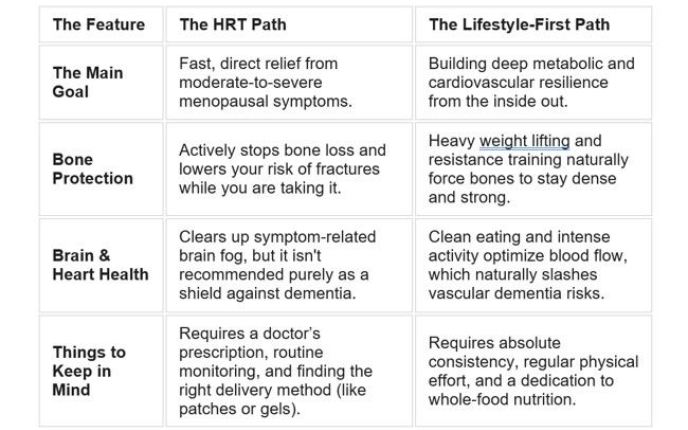
- HRT is an absolute rockstar for symptom relief. If you are being blindsided by hot flashes, waking up drenched in night sweats, experiencing wild mood shifts, or dealing with major sleep disruptions that leave you exhausted, HRT is the most effective tool available to put those fires out and give you your quality of life back.
- HRT is not a blanket preventative medicine. If you feel generally great and have no major symptoms, the medical consensus is clear: you shouldn't start HRT solely to ward off future heart disease or dementia.
2. The Side-by-Side Breakdown: HRT vs. Lifestyle-First
To help you see how these two approaches match up, let’s look at them side-by-side.
3. The "Fit, Healthy, and Lifting Heavy" Advantage
Here is a piece of science that should make you feel incredibly empowered: If you are already active and lifting weights, your body is working with a completely different baseline.
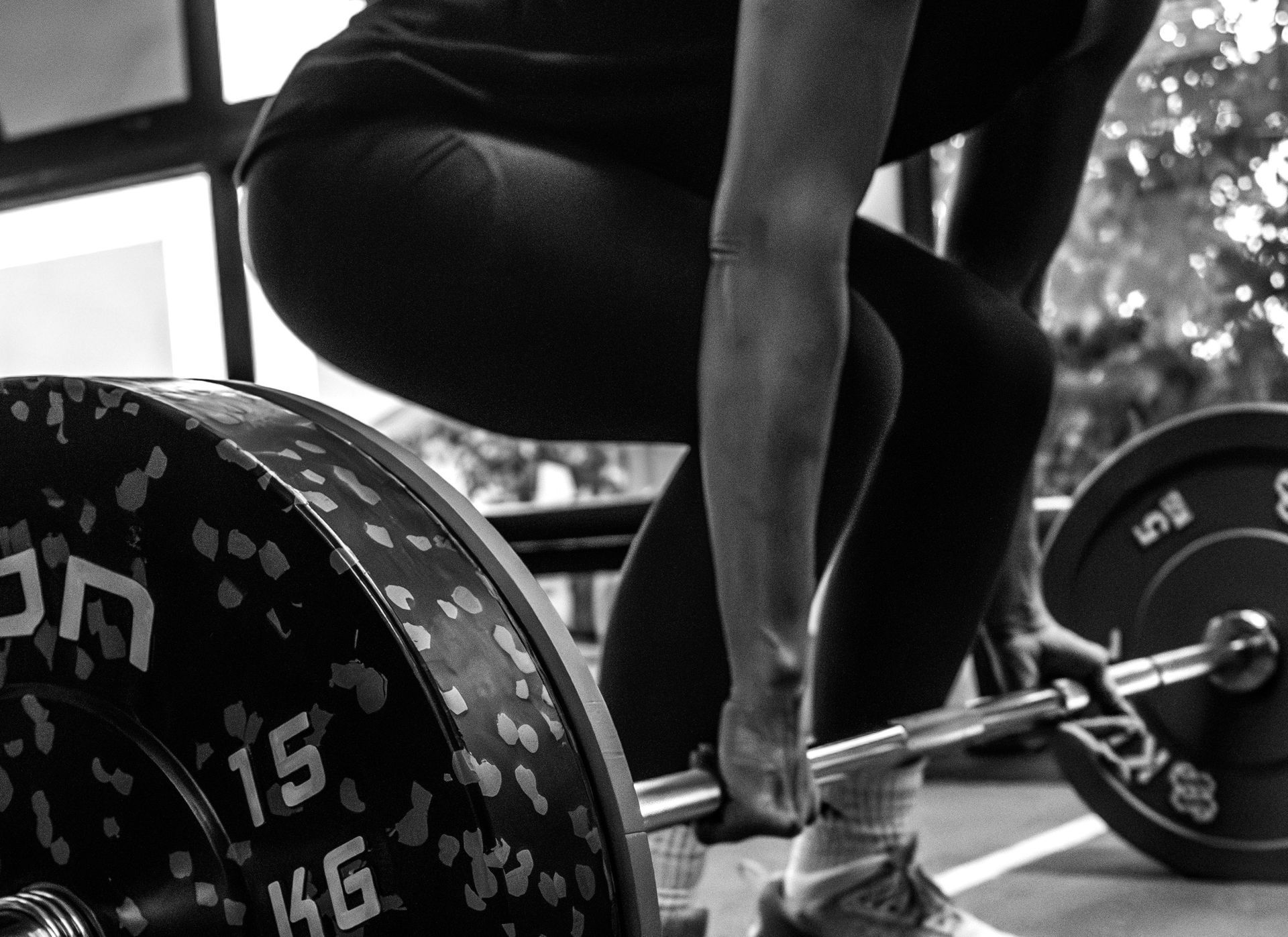
A major reason women consider HRT as they age is to protect their bones from osteoporosis once estrogen drops. But guess what? Heavy resistance training does that exact job naturally. When you put mechanical stress on your muscles and bones by lifting weights, you send a loud, clear signal to your body to keep those bones dense, structurally sound, and resilient.
The same goes for your brain. Eating a clean, whole-food diet keeps your blood sugar stable and your insulin sensitivity high. Because poor metabolic health is heavily linked to cognitive decline, your healthy everyday habits are already forming a world-class shield against future brain fog and dementia. If your body already feels fantastic, your lifestyle is already doing the heavy lifting!
4. Why Is Everything Suddenly Aching? (The Estrogen-Joint Connection)
While we are talking about symptoms, we have to address the elephant in the weight room: sudden, mysterious joint pain. A lot of women wake up one day during perimenopause and notice their knees, hips, or fingers feel stiff and achy, and they immediately assume, “Well, I guess I’m just getting old.”
Hold on a second! You aren’t just "getting old"—your hormones are playing tricks on your joints.
Estrogen isn't just a reproductive hormone; it is also a natural anti-inflammatory and a massive contributor to joint lubrication. Think of estrogen as your body’s internal WD-40. It keeps the cartilage hydrated, elastic, and cushioned. When estrogen levels start to slide, your joints lose a bit of that natural fluid and cushioning, which can lead to that telltale stiffness and inflammation (a lovely little milestone doctors call menopausal arthralgia).
How Heavy Lifting Comes to the Rescue
If your joints are feeling creaky, your first instinct might be to rest and avoid movement. But from a physiological standpoint, that is actually the worst thing you can do! Resistance training is one of the most effective ways to naturally "grease the wheels."
When you perform controlled resistance training and lift heavy weights, two incredible things happen:
- Pumping the Lubricant: Joints don't have their own direct blood supply. They rely on movement to pump fresh synovial fluid (the joint's natural lubricant) in and out of the cartilage. Lifting weights mechanically compresses and releases the joint, forcing fresh, nutrient-rich fluid into the area to cushion the bones.
- Building Built-In Shock Absorbers: When you strengthen the muscles, tendons, and ligaments around a joint (like building up your quads and hamstrings to protect your knees), those muscles start absorbing the physical impact of your daily life. You are essentially building a custom set of premium shock absorbers, taking the direct, painful pressure off the joint itself.
So if you are dealing with midlife joint aches, don't run away from the weights. Your body doesn't need to be coddled; it needs to be strengthened. By fueling your body with clean protein to repair that tissue and hitting the weights consistently, you can keep your joints moving smoothly and pain-free, with or without HRT.
5. Your Next Steps Game Plan
If you’re trying to decide your next move, don't guess. Use this quick checklist to get clear before you talk to a professional:
- Track Your Baseline: For the next two weeks, keep a quick journal of your sleep quality, daily energy levels, and any sudden mood shifts or hot flashes.
- Identify Your Non-Negotiables: Is a specific symptom actively stopping you from sleeping, working, or exercising? If it is impairing your life, that is a clear sign to explore HRT with a specialist.
- Audit Your Habits: Are there gaps in your sleep, nutrition, or strength training that you could tighten up first to see if things improve?
- Have an Informed Conversation: Take your tracking notes to a menopause-literate doctor to look at your personal and family medical history together.
The Bottom Line
Choosing not to take HRT isn't "giving up" on your health, and choosing to take it isn't a shortcut or a failure. They are simply different, powerful tools. If your mood is steady, your sleep is solid, your joints feel good, and your energy is high, you should feel incredibly confident that your healthy lifestyle is paving the way for an amazing, vibrant future. You've got this!
Loved our latest chat on HRT? Remember, hormones are only part of the story. If you want to genuinely bulletproof your body for the future, you need to start investing in your Physical Wealth.
Head over to the next blog, where we break down exactly how nutrition, movement, and recovery work in perfect harmony to keep you strong, sharp, and injury-free for life.
