
AOT Gym- Experts Corner


Heavy Lifting Isn’t Enough: Why Your Training Needs Speed, Power, and Athleticism
There is something truly empowering happening in gyms right now. For years, strength training—especially for women—was treat with hesitation. Today, the script has flipped. People are getting under barbells, carrying heavy loads, building raw strength, and taking control of their longevity.
As a coach who has lived and breathed strength and conditioning for years, seeing people build their physical armor brings me genuine joy.
Strength is non-negotiable. It’s your metabolic engine, your joint protector, and your bone density bank account.
But as both a coach and someone who loves moving fast and play sports, I have to be honest with you: Strength alone is only half the battle.
There is a missing ingredient in how most adults train these days, and we usually don’t notice it’s gone until life catches us off guard. That ingredient is athleticism—specifically, power and explosive reaction speed.
To understand why we need both, imagine a scenario that happens every single day: you’re walking down a street, catch your foot on an uneven paving slab, and suddenly stumble forward.
What happens in the next split second relies on two entirely distinct physical systems:
- Power and Reaction Speed are what kick in instantly. Within milliseconds, your brain sends a rapid electrical signal to your muscles to snap your leg forward, readjust your center of gravity, and stop your face from hitting the concrete.
- Strength is what protects you if you do fall. Dense muscles, strong tendons, and resilient bones absorb the force of impact, dramatically decreasing the risk of a severe injury or fracture.
Notice the key difference? Strength protects you from the outcome of a fall, but power and reaction speed prevent the fall in the first place.
If we only train to lift heavy objects slowly—deadlifts, squats, bench presses—we build incredible force production. But real life rarely moves at a slow, controlled tempo. Real life is unpredictable, fast, and dynamic. To navigate it safely and confidently, we need to train our bodies to produce force fast.
Use It or Lose It: Slow-Twitch vs. Fast-Twitch
Inside your muscles, two main fiber types handle everyday life:
· Slow-Twitch (Type I): Built for endurance and steady effort. They power low-intensity activities like maintaining upright posture or going for a 5-mile run without fatiguing.
· Fast-Twitch (Type II): Built for explosive speed and maximum force. They fire when you sprint to catch a bus, react to catch a falling cup, or snap your leg out to prevent a tumble.
Here is the catch: as we age, fast-twitch fibers atrophy at nearly double the rate of slow-twitch fibers if we don't actively train them. Without targeted speed and power work, those rapid-reaction fibers go dormant, slowing your reaction time when you need it most.
This process, known as dynapenia (the age-related loss of muscle power and speed), doesn't wait until you're in your 70s to begin. It starts subtly in our late 20s and 30s. If all your physical activity consists of steady cardio or controlled, slow weightlifting, those fast-twitch motor units essentially go dormant.
When your fast-twitch fibers go dormant, your reaction time slows down. You become slightly less agile, a bit more rigid, and less capable of moving explosively when an emergency demands it.
Why We Must Start Young (And Why It’s Never Too Late)
As coaches, one of our primary goals is helping people build a deep physical "reservoir."
Developing athleticism, coordination, and explosive power when we are younger—in our teens, 20s, and 30s—lays down a neural infrastructure that pays dividends for the rest of our lives. When you teach a young body how to jump, land, accelerate, decelerate, and change direction, you aren't just building muscle; you are training the nervous system. You are teaching the brain how to recruit high-threshold motor units rapidly.
But what if you didn't train like an athlete in your youth? The human nervous system remains adaptable at any age. You can awaken fast-twitch motor units whether you are 25, 45, or 65. The strategy simply changes to match your current baseline.
How Strength and Power Work Together in Daily Life
Think of strength and power as two complementary tools in your physical toolkit:
- Strength (The Shield): Gives you the raw capacity to carry heavy bags, lift furniture, maintain upright posture, and protect your spine and joints. It keeps your bones dense and builds structural resilience.
- Power & Athleticism (The Brakes and Steering): Gives your nervous system agility and responsiveness. It’s what lets you sprint across the street when the light changes, catch a falling glass off the counter, react to a step missing on the stairs, or play spontaneously with your kids or grandkids without pulling a muscle.
Without strength, power lacks structural support. Without power, strength lacks real-world responsiveness. You don't have to choose between being strong or being athletic—you need both to thrive.
Reclaiming Your Inner Athlete
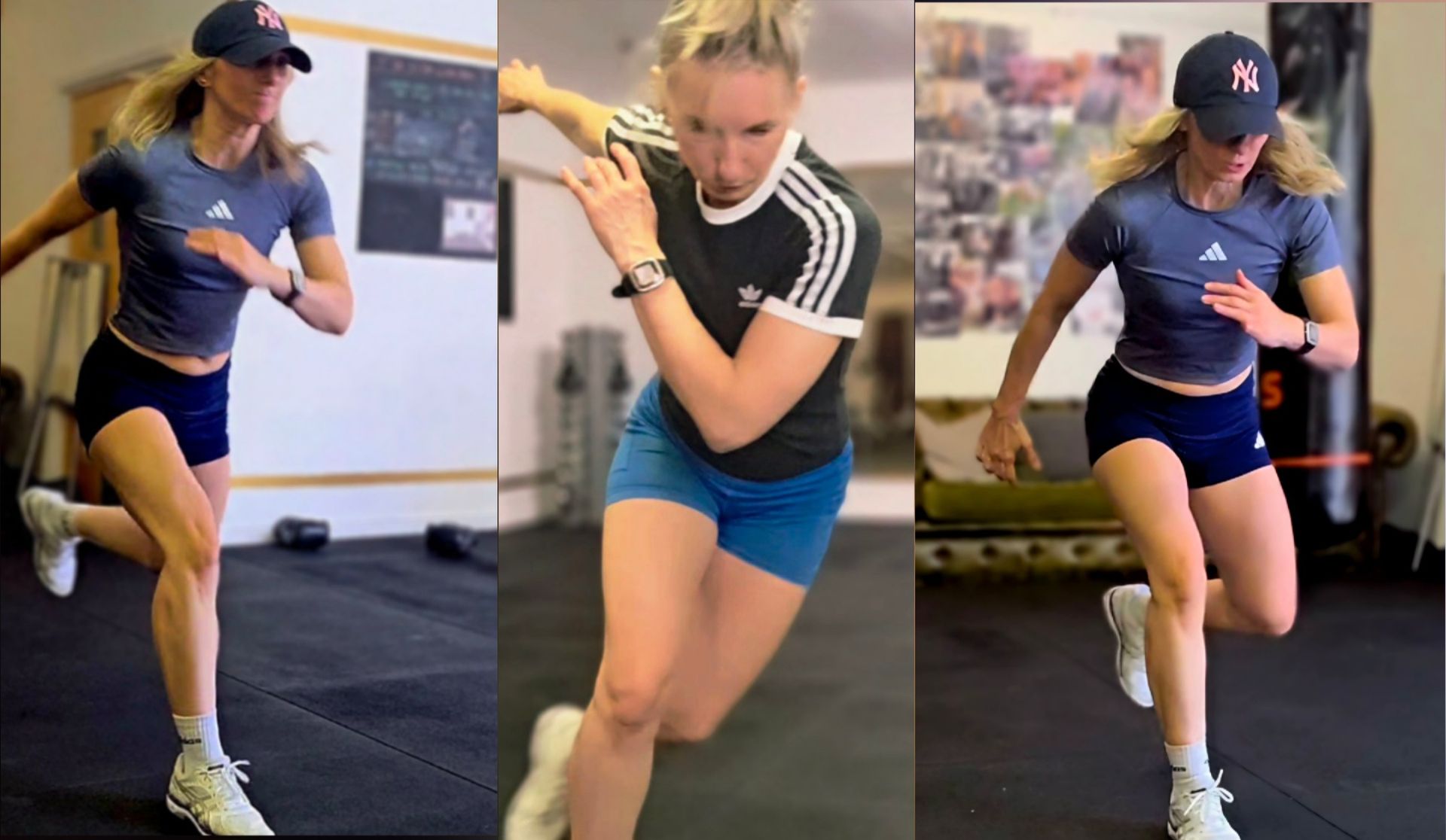
You don't need to join a track team or perform dangerous 48-inch box jumps to build power and speed. In fact, introducing explosive movement should be gradual, intentional, and fun.
Here is how we start bringing athleticism back into a training routine:
- Move with Intent: On lighter sets of squats or presses, focus on driving the weight up as fast as possible (while maintaining strict control on the way down).
- Introduce Low-Impact Plyometrics: Simple movements like medicine ball slams, light pogo hops, or kettlebell swings teach the body to absorb and produce force rapidly.
- Change Directions: Incorporate multi-directional agility drills, lateral lunges, or dynamic movement patterns rather than staying entirely in straight lines.
- Prioritize the Nervous System: Do your speed and power work at the beginning of a session when your mind and body are fresh, not at the end when you are fatigued.
Strength gives you life capacity. Athleticism gives you life agility. When you blend the two, you don't just build a body that looks strong—you build a resilient, reactive body that is ready for whatever life throws at it.
Arleta
